
Gdańsk Entrance Exam: Format, Topics and Exam Day
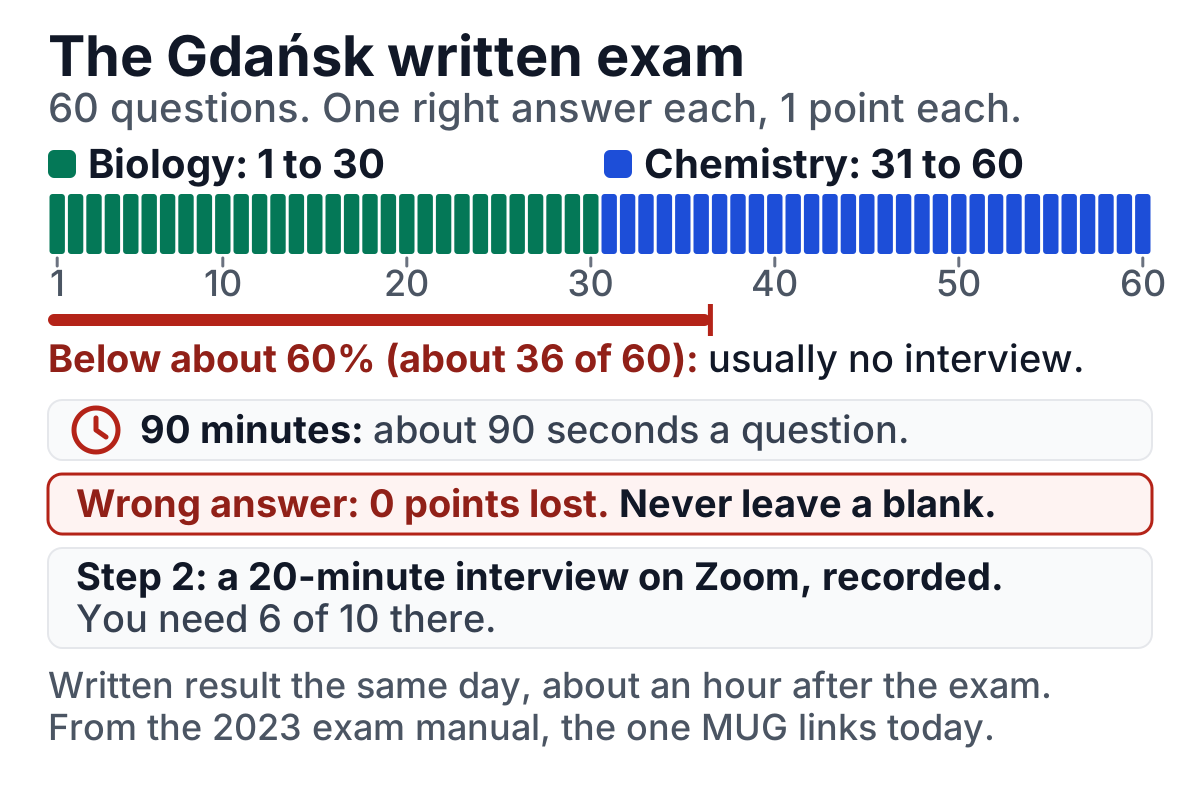
In short. The Medical University of Gdańsk (MUG) sets an online exam in biology and chemistry for its English medicine programme. A wrong answer costs nothing, so answer every question. This guide covers the format, the topics, exam day, the interview, the dates and the costs. The numbers come from the 2023 exam manual, the manual the university links today.
The exam in four numbers
- 60 questions: 30 biology first, then 30 chemistry, each with one right answer.
- 90 minutes: about 90 seconds a question. If you press Finish early, you cannot go back, even with time left.
- 0 points lost for a wrong answer, so answer every question.
- Below about 60% usually means no interview. That is about 36 of 60 points.
First, Gdańsk checks your school grades, final or expected. You need biology at an advanced level, plus chemistry, physics or maths at that level. Ask the Admission Office which of your courses count. If your grades pass, you are invited to the online exam.[1]
What is on the exam
The level is advanced high school.
Biology
- Cells and genetics, including Mendel's laws, DNA and RNA.
- Protein synthesis, reproduction and development.
- How the human body is built and how it works.
Chemistry
- Units, matter and the periodic table.
- Chemical equations and stoichiometry, which means the amounts in a reaction.
- Concentration calculations and redox reactions.
- Organic chemistry, from alkanes to proteins, and molecular structures.
Gdańsk also shares sample questions from 2014, in biology and chemistry. They are old, but they show the style of the questions, so try them.
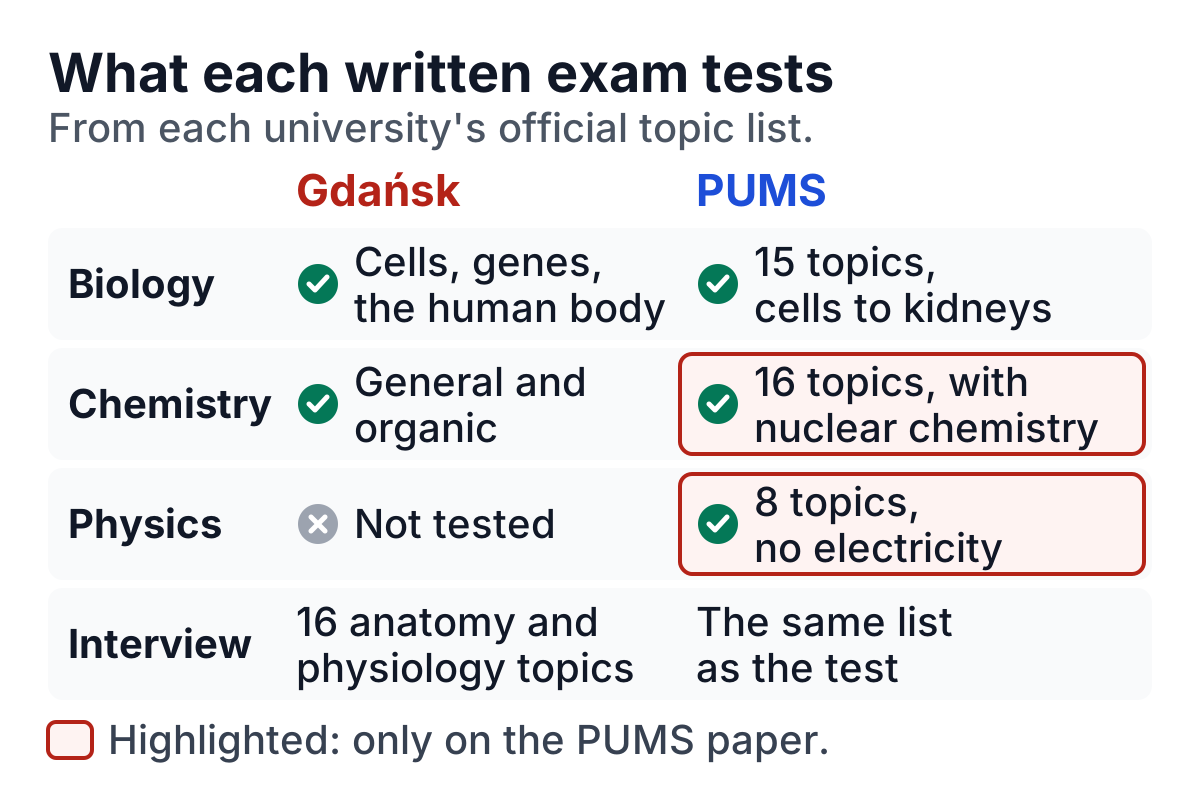
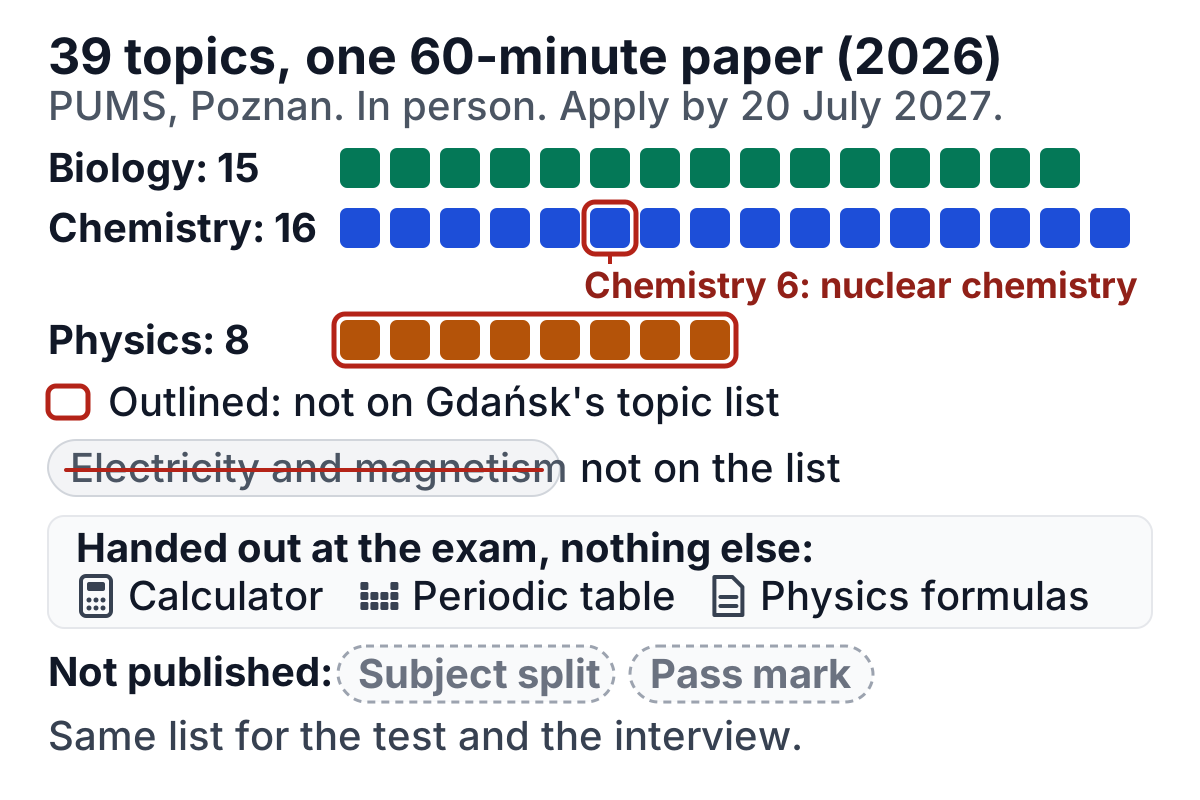
There is no physics on the Gdańsk written exam. PUMS in Poznan does test physics: see the PUMS topic list.
How scoring works
- Each right answer gets 1 point, so the maximum is 60.
- A wrong answer loses nothing, so never leave a blank.
- Below about 60% usually means no interview.
- At the interview, you need 6 out of 10.
Gdańsk does not publish how the two scores combine.[2]
Exam day: the official checklist
You answer in the university's online admission system while an examiner watches you on Zoom. Your camera stays on the whole time, and you share your screen. Only the test window may be open. If your video stops, the university can cancel your exam.
The manual says to check these the day before:
- A stable internet connection on the computer you will use.
- Your camera, speakers and microphone.
- A calculator. The manual says some restrictions apply, and links its calculator policy. Read it first.
- The five reference sheets from the exam page, printed.
- White paper for working, and two pens.
- Your login and password for the admission website.
- The Zoom meeting ID and password.
- A room where you are alone. Tell your family, so nobody disturbs you.
- The interview topics, listed below.
The five reference sheets are:
- The periodic table.
- An electronegativity table.
- A solubility chart.
- The galvanic series, which lists metals by how easily they lose electrons.
- Amino acids.
Check your device. Some devices cannot send your camera and your screen at the same time. The manual names iPads and iPhones, so test yours at least one day before.
On the day:
- Show the examiner your printed reference sheets before you start.
- Do not press Start until the examiner tells you to.
- Pick one answer, save it, then go to the next question.
- You can change an answer, but save each change.
The whole session takes about two hours, with registration and an introduction. The test itself is 90 minutes.
One rule matters most: any outside help, from websites or other people, means rejection with no retake. The whole exam is recorded.[2]
What happens after
You get your result the same day, about an hour after the exam, in the Zoom waiting room. You hear one of two things:
- Invited to the interview.
- Rejected.
If you are invited, one of these follows:
- A conditional place, with the interview held later, for example if you have predicted grades.
- Final acceptance, after the interview, if you have already finished school.
- The waiting list, if your place in the ranking is not high enough yet.
The interview: 16 topics
The interview lasts 20 minutes on Zoom, and it is recorded. Your face must be visible, and you need a valid ID. It checks your English, your motivation and whether you suit medicine. It also covers 16 topics in anatomy and physiology (2025 list):[3]
- Cells.
- Heredity and genetic diseases.
- Causes of disease.
- Skin.
- Bones.
- Muscles.
- The nervous system, including the 12 cranial nerves.
- The senses.
- Hormones.
- Blood.
- The heart and blood vessels.
- Lymph and the immune system.
- Breathing.
- Digestion, nutrition and metabolism.
- The kidneys and urine.
- Reproduction.
These topics go deeper than the written exam. Our practice will not simulate the interview, so practise explaining each topic out loud, in English.
Dates: 2026, and what to expect
Gdańsk has not published its 2027/28 dates yet. Here is the 2026 cycle:[4]
| 2026 | Date |
|---|---|
| Registration opened | 18 March |
| Deadline for Medicine | 15 July |
| Exams in May | 14 and 28 May |
| Exams in June | 24 June |
| Exams in July | 8 July (USA and Canada), then 15, 22, 29 and 30 July |
Agencies also ran their own dates from May to July, and some were in person. An agency's deadline can be earlier than the university's.
For 2027/28, expect a similar pattern. In 2026, registration opened in mid-March, and the deadline for Medicine was in mid-July.
What it costs
For 2026/27:
| What | Amount |
|---|---|
| Application fee | 100 PLN |
| Separate exam fee | None |
| Orientation week, if accepted | 3,100 PLN |
| Tuition | 64,200 PLN a year |
The orientation fee is due within 30 days of acceptance. Tuition is paid in two parts, by 15 October and by 15 February. A year of tuition is about EUR 15,000.[5]
English
All candidates need a B2 English certificate before they apply (as of 2026). IELTS 5.5 or TOEFL iBT 80 are two examples. You may not need one if you have:
- The IB, with English at HL or SL.
- A Nordic diploma: 4 or higher in Norway, C or VG in Sweden, or 7 or higher in Denmark.
Being a native speaker, or having GCSE English, is not on that list, so ask the Admission Office. Your English is checked again at the interview.[6]
Not the University of Gdańsk
The Medical University of Gdańsk and the University of Gdańsk are two different universities. Medicine in English is at the Medical University (MUG), and you apply at admission.mug.edu.pl. Our Gdańsk school guide has every step on one page.
Sources: the MUG entrance exams page, exam manual (2023), interview topics (2025), admission criteria, admission FAQ, fees and tuition. PolandMedPrep is independent, and we are not linked to the university. If our page and theirs differ, theirs is right.
Free by email
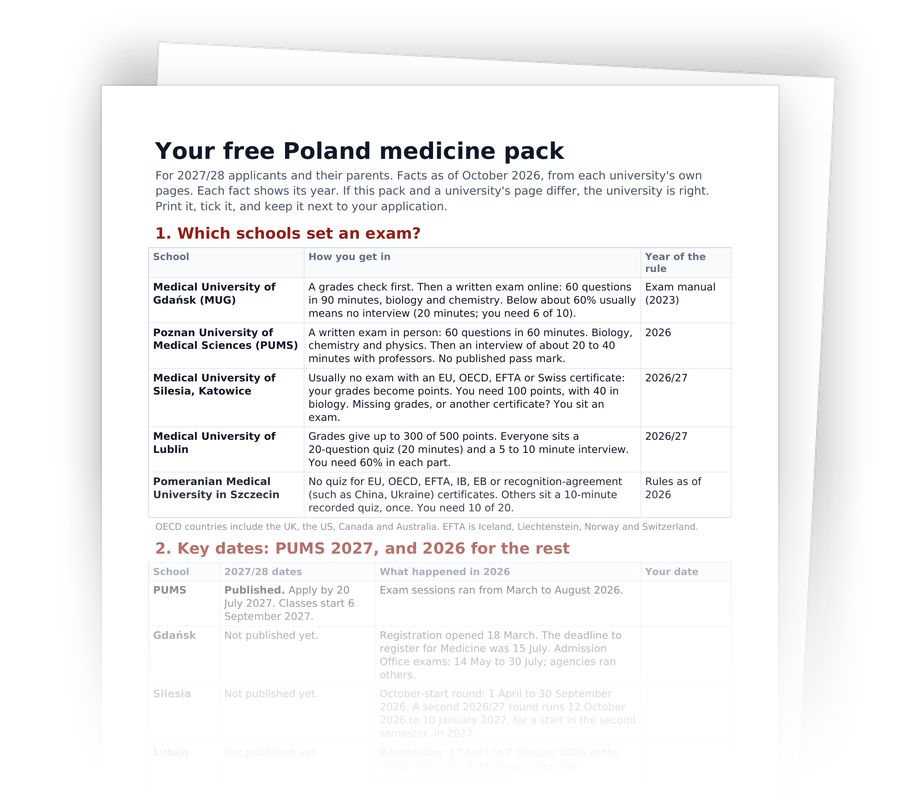
Get the free printable pack
A 4-page PDF to print and tick, for all five schools.
- Gdańsk: the exam-day checklist and the interview topics.
- Key dates: PUMS's published deadline, and last year's dates for the other four schools.
More Poland medicine guides
All free guides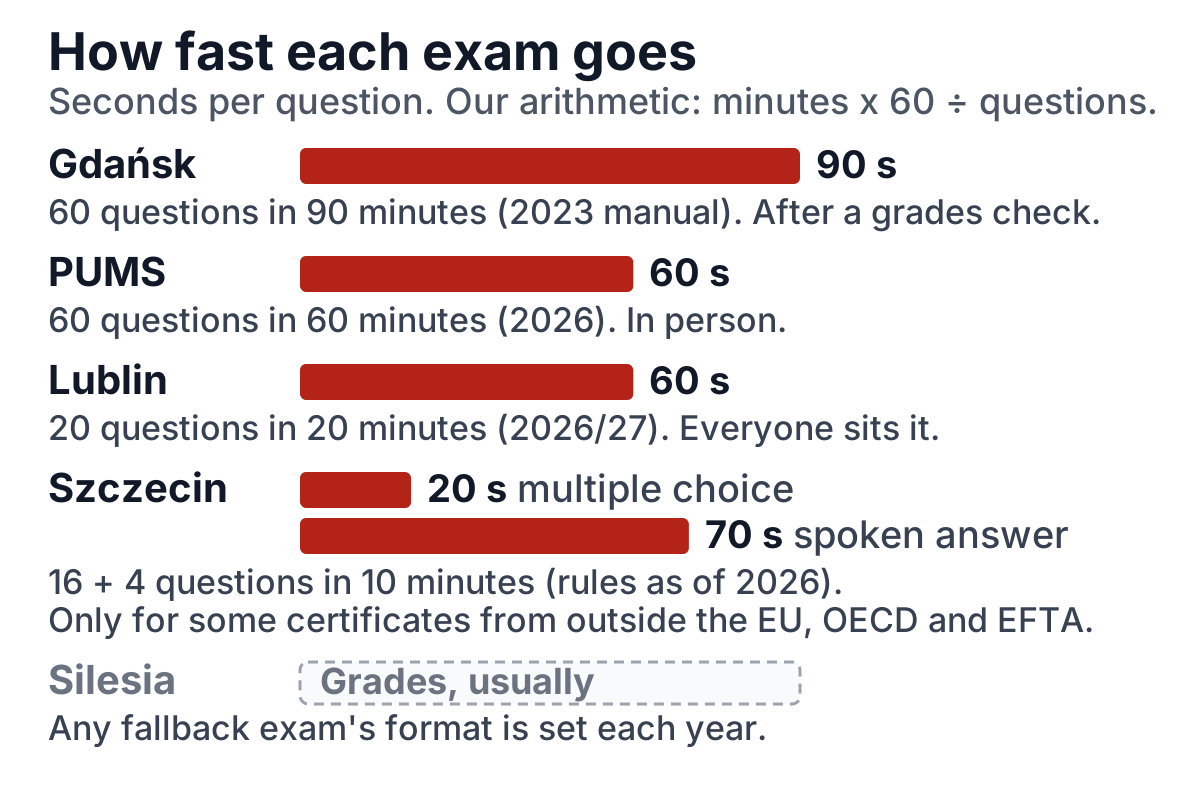
Medicine in Poland: Do You Need an Entrance Exam?
Gdańsk and PUMS set a written exam. Lublin sets a short online test for everyone. Silesia usually goes by grades. Szczecin tests only some certificates. Costs and dates too.
Gdańsk vs PUMS: The Two Written Exams Compared
Gdańsk: 60 questions in 90 minutes, online, no physics. PUMS: 60 in 60, in person, with physics. Side by side, with a study order for 8 days, 4 weeks or 12 weeks.
PUMS Entrance Exam Syllabus: Every Topic, Physics Included
The full official PUMS topic list as a checklist: 15 biology, 16 chemistry and 8 physics topics. Plus the exam format, the costs and the 20 July 2027 deadline.