
PUMS Entrance Exam Syllabus: Every Topic, Physics Included
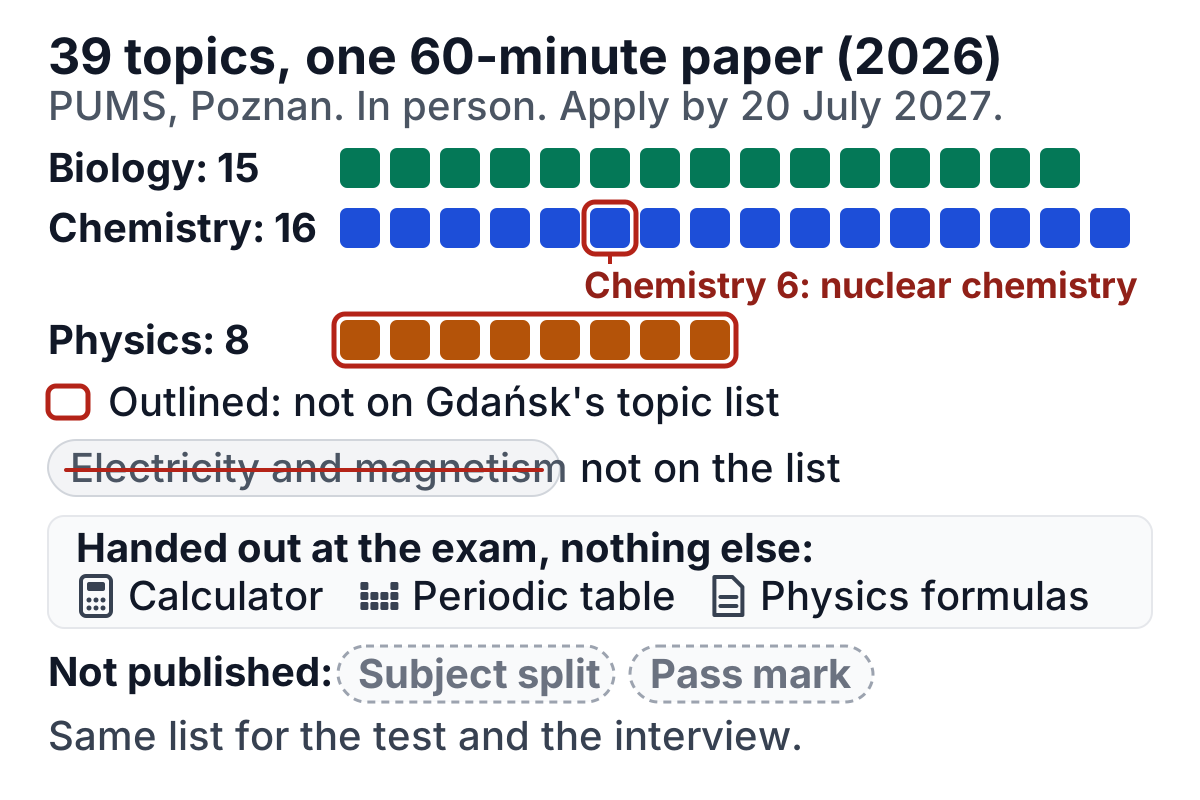
In short. PUMS sets one written exam in biology, chemistry and physics, and you sit it in person. To start in September 2027, apply by 20 July 2027. One official list covers every topic, for the exam and the interview. Here is that list, with a box for each topic: tick what you know, then start with the rest.
The exam in four numbers
- 60 questions in one paper, each with one best answer.
- 60 minutes, which is about one minute a question.
- 8 physics topics, with no electricity or magnetism.
- 685 PLN to sit, as PUMS listed its fees in 2026: 85 PLN to apply, plus 600 PLN for the exam and interview.
You sit the exam in person. We have not checked the 2027 session list yet, so see the PUMS exam page. In 2026, sessions ran from March to August, in cities such as Poznan, London and Dubai.[1]
The level is the end of high school, which PUMS calls "high school leaving level".
The full topic list
Go down the list and mark each topic you know well. Then start with the topics you do not know yet. Nuclear chemistry is in bold, because it is not on Gdańsk's published topic list.
Biology: 15 topics
- The eukaryotic cell
- The cell cycle, mitosis and meiosis
- Cellular respiration and fermentation
- Viruses
- Chromosomal and molecular inheritance, including X- and Y-linked genes
- From DNA to protein, mutations and gene control
- Tissues and body membranes
- The senses
- The nervous system
- Neurons, synapses and signals
- Hormones
- The heart and blood vessels
- Breathing and haemoglobin
- Digestion and nutrition
- The kidneys
Chemistry: 16 topics
- Atoms
- The periodic table
- Types of reactions, and balancing them
- Moles and mass
- Reaction rates and equilibrium
- Nuclear chemistry: decay and half-life
- Units and significant figures
- Chemical calculations
- Solutions
- Acids and bases
- Alcohols
- Amino acids and proteins
- Enzymes and vitamins
- Carbohydrates
- Lipids
- Nucleic acids and protein synthesis
Physics: 8 topics
- Newton's laws
- Fluids and Archimedes' principle
- Light and lenses, including fibre optics and corrective lenses
- Motion (kinematics)
- Sound, including the Doppler effect
- Temperature and gases
- Waves and vibration
- Work, power and energy
Electricity and magnetism are not on the list. If a practice question from any source asks about them, note it, but finish the list first.
Each topic has a few lines of detail in the official topic list (PDF). Download it and read it next to this checklist.
What is not on Gdańsk's exam or topic list
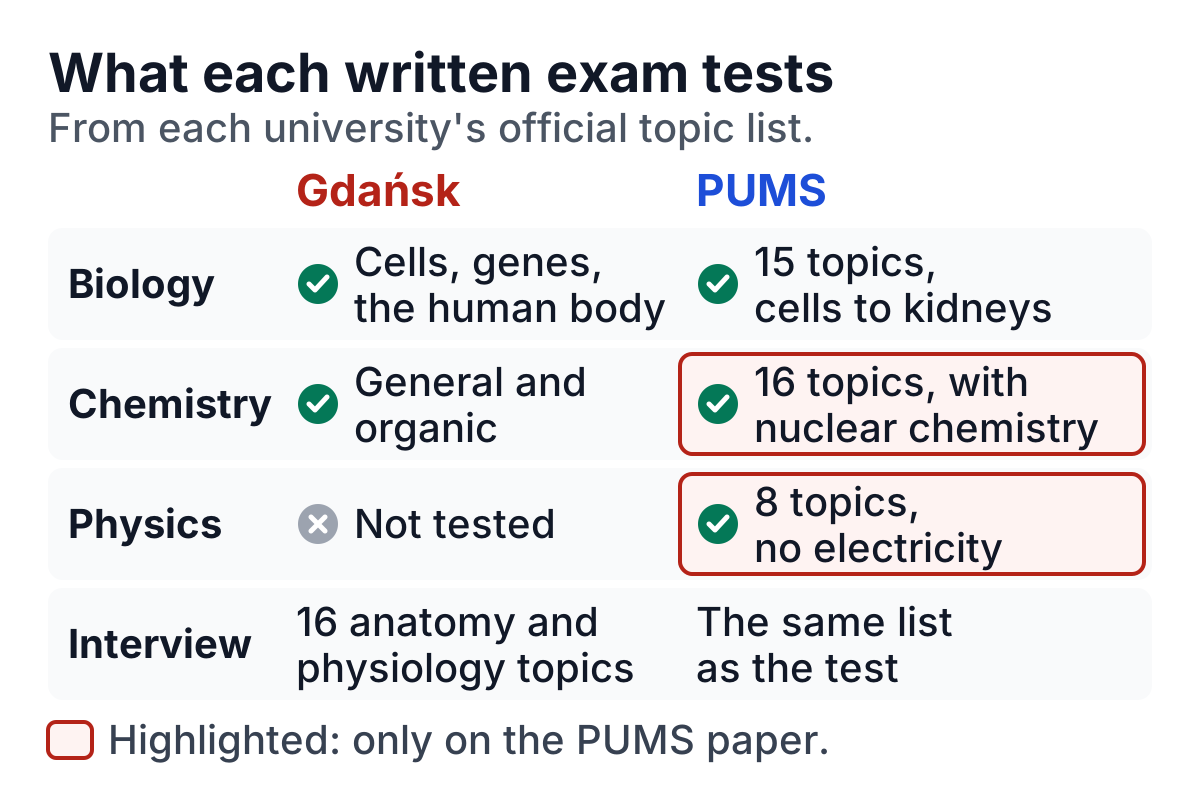
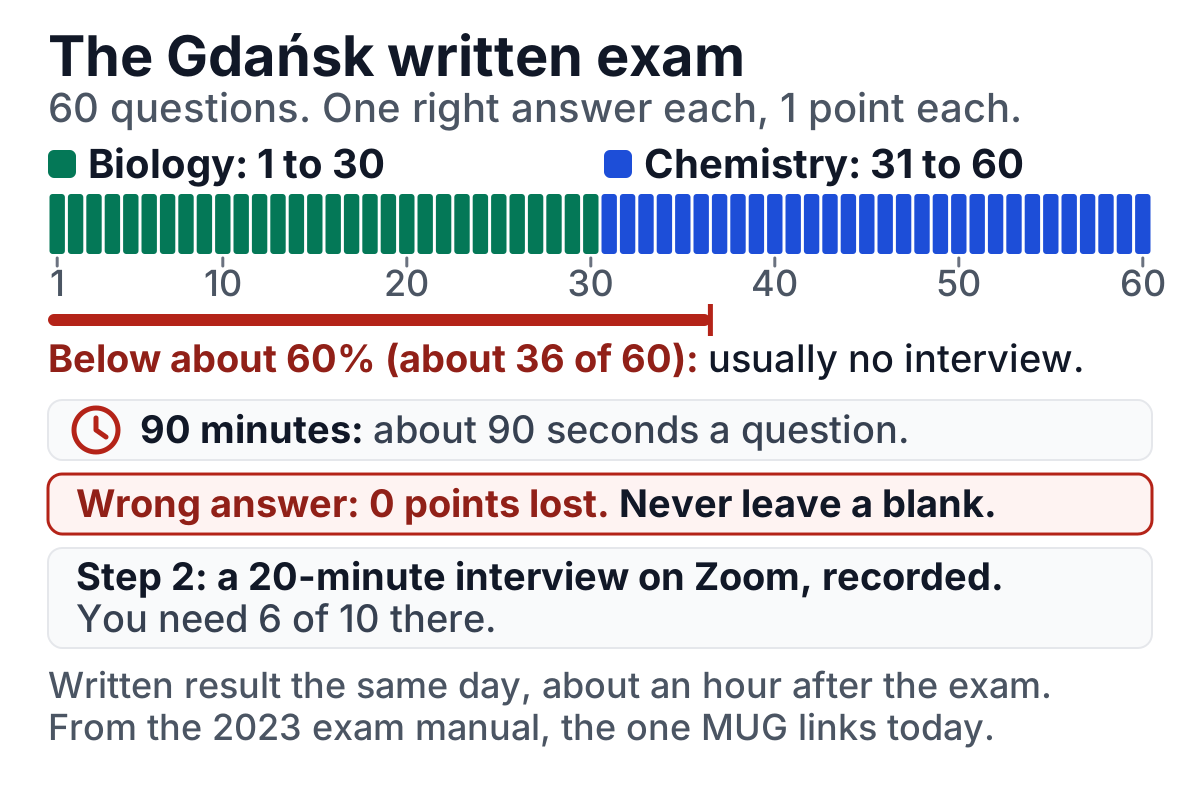
Applying to Gdańsk too? Then note one big difference: the Gdańsk written exam tests biology and chemistry only.[2] Two parts of the PUMS list are extra:
- Physics: all 8 topics.
- Nuclear chemistry: radioactive decay and half-life. It is not on Gdańsk's published topic list.
No A-level Physics? Then plan your time like this:
- Start with the 8 physics topics, because they may be new to you.
- Then do nuclear chemistry.
- Then go through biology and the rest of chemistry, gap by gap.
What you get in the exam room
PUMS gives you three aids, and no others are allowed:[1]
- A calculator.
- A periodic table.
- A sheet of physics formulas.
One list for the exam and the interview
After the written exam comes an interview with university professors. It lasts about 20 to 40 minutes, and it uses the same topic list as the exam.
PUMS also looks at:
- Your motivation and how you work with people.
- Volunteering or work in health care.
- Your English.
Keep a record of any volunteering. Our practice will not simulate the interview.
What PUMS does not publish
- The subject split: PUMS does not say how many questions are biology, chemistry or physics.
- A pass mark: there is no published score to aim for.
So prepare every line of the list, because no subject is safe to skip.
Two official ways to practise
PUMS offers its own practice, and both kinds are worth using.
- Official practice quizzes. PUMS gives access to them for an 85 PLN processing fee. Its application fee is also 85 PLN, so ask PUMS if this is one payment.
- Free Pearson study materials for the first 150 registered candidates who meet the eligibility criteria. You get a personal code after you register for the exam.
PUMS recommends five Pearson courses: General Biology, Anatomy & Physiology, General Chemistry, Introduction to Chemistry and Physics. PUMS also says the materials do not guarantee a place.[3]
What it costs, and the deadline
| What | Amount or date |
|---|---|
| Application fee (listed in 2026) | 85 PLN |
| Exam and interview fee (listed in 2026) | 600 PLN |
| Total to sit the exam | 685 PLN |
| Deadline to start in September 2027 | 20 July 2027 |
| First day of classes | 6 September 2027 |
PUMS has already published the 2027 deadline.[4]
For 2026/27 entrants, tuition is 71,000 PLN a year in years 1 and 2. The six years cost 485,000 PLN in total.[5]
You also need an English certificate, such as IELTS 6.5 or TOEFL iBT 94 (as of 2026). The full list, and every step, is in our PUMS school guide.
Sources: the PUMS entrance exam page, topic list (PDF), admission requirements and tuition page. PolandMedPrep is independent, and we are not linked to PUMS. If our page and theirs differ, theirs is right.
Free by email
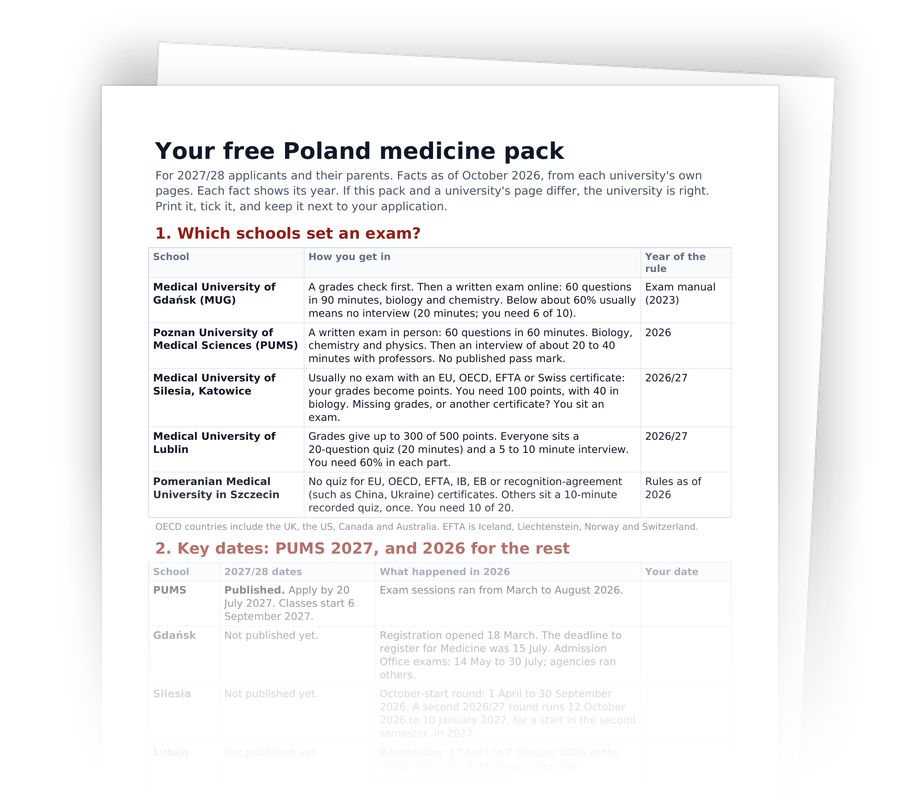
Get the free printable pack
A 4-page PDF to print and tick, for all five schools.
- PUMS: the official topic list to tick, physics included.
- Key dates: PUMS's published deadline, and last year's dates for the other four schools.
More Poland medicine guides
All free guides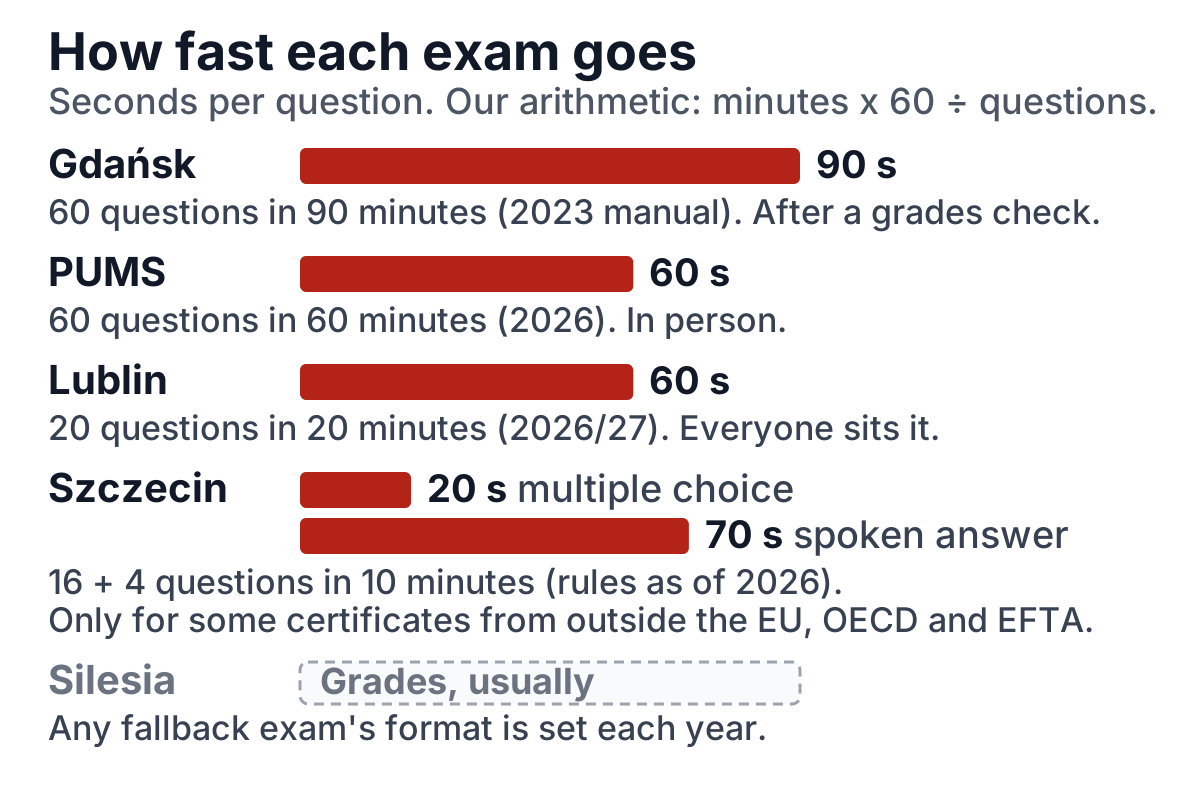
Medicine in Poland: Do You Need an Entrance Exam?
Gdańsk and PUMS set a written exam. Lublin sets a short online test for everyone. Silesia usually goes by grades. Szczecin tests only some certificates. Costs and dates too.
Gdańsk vs PUMS: The Two Written Exams Compared
Gdańsk: 60 questions in 90 minutes, online, no physics. PUMS: 60 in 60, in person, with physics. Side by side, with a study order for 8 days, 4 weeks or 12 weeks.
Gdańsk Entrance Exam: Format, Topics and Exam Day
The Gdańsk medicine entrance exam: 60 questions in 90 minutes, online (2023 manual). What is on it, how scoring works, the exam-day checklist, the interview topics, dates and costs.